Joint Support
Glucosamine & Chondroitin
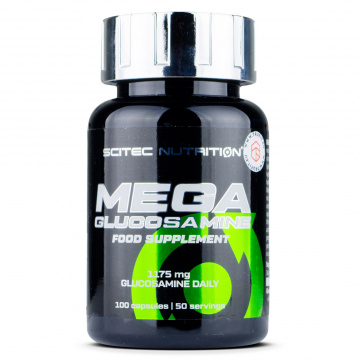
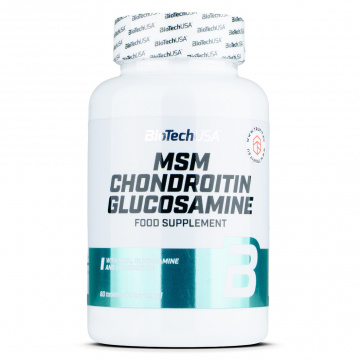
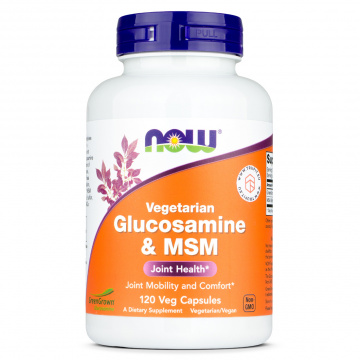
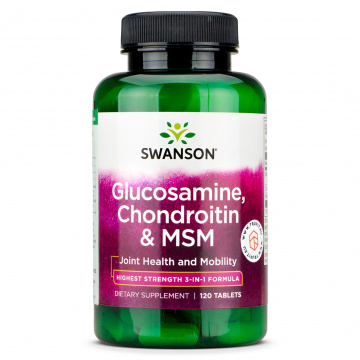
Glucosamine and chondroitin are natural building blocks of cartilage, the tissue that cushions the joints. They are among the most popular joint supplements and are often combined with MSM. Here you will find glucosamine sulfate and HCl tablets and capsules, glucosamine with chondroitin, formulas with MSM and a vegetarian glucosamine not made from shellfish.
Glucosamine is an amino sugar that the body uses to build cartilage, the smooth tissue that covers the ends of bones and lets joints move without friction. Chondroitin is a larger molecule in the same cartilage that holds water and gives it its shock-absorbing quality. The body makes both itself, but food contains almost none, and with age or heavy load on the joints cartilage wears faster than it is rebuilt. That is why they are taken as supplements, usually together, by athletes, people who do heavy physical work and older adults.
Glucosamine comes in two main forms. Glucosamine sulfate is the form used in most clinical studies. Glucosamine hydrochloride (HCl) contains more glucosamine per gram, so tablets can be smaller. Most glucosamine is made from the shells of shrimp and crabs; vegetarian glucosamine is produced by fermenting corn and suits people with a shellfish allergy. Chondroitin is usually made from bovine cartilage.
Many formulas add MSM, an organic sulfur compound, and some are combined with collagen, which provides other cartilage building blocks. Studies usually measure results after 8–12 weeks of daily use, so glucosamine is a supplement to take regularly, not only when joints hurt. For other joint products see joint support and joint and bone health.
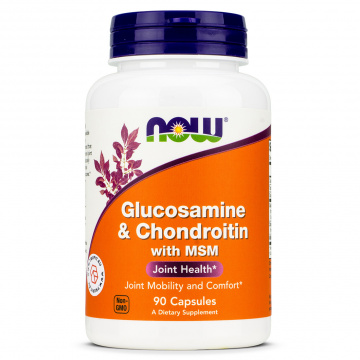
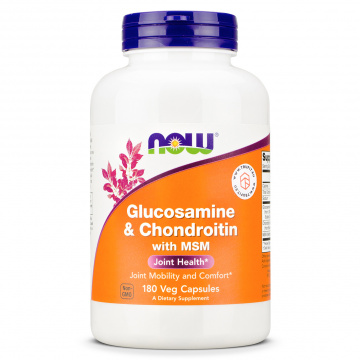
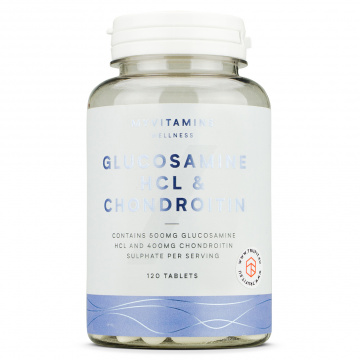
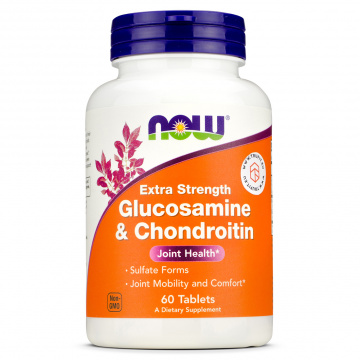
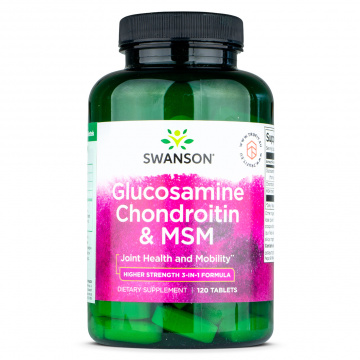
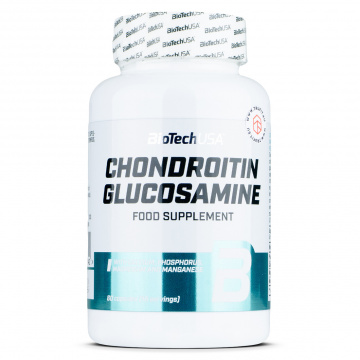
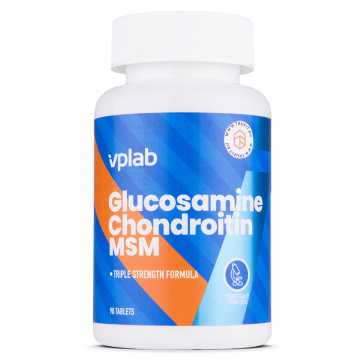
Glucosamine & Chondroitin
Frequently Asked Questions
What is glucosamine?
Glucosamine is a natural compound the body uses to build and maintain cartilage, tendons and ligaments. It is part of glycosaminoglycans, the molecules that keep cartilage elastic and able to absorb shocks. The body makes glucosamine from glucose, but food contains almost none, so it is taken as a supplement, usually made from shellfish shells or, in vegetarian products, from fermented corn.
Which glucosamine is best?
For most people the best choice is glucosamine sulfate at about 1,500 mg a day, the form and dose used in most studies. Glucosamine HCl is a good alternative if you want smaller tablets. Choose a product with chondroitin if you want both cartilage building blocks in one tablet, and a vegetarian glucosamine if you are allergic to shellfish.
Why is glucosamine combined with chondroitin?
Glucosamine and chondroitin work together in cartilage: glucosamine is a building block, and chondroitin holds water and gives cartilage its cushioning. Studies suggest the combination can help reduce joint discomfort, especially in the knees. A typical daily dose is 1,500 mg of glucosamine with 800–1,200 mg of chondroitin, which is why many products contain both.
What is MSM and why is it added?
MSM (methylsulfonylmethane) is an organic sulfur compound found naturally in small amounts in food. Sulfur is needed to build connective tissue, and studies suggest MSM can help reduce joint discomfort and stiffness. It is often added to glucosamine and chondroitin formulas so that one product covers several joint ingredients.
Does glucosamine help joints?
Studies suggest that glucosamine, especially glucosamine sulfate, can help reduce joint discomfort and slow the wear of cartilage in the knees when taken daily for several months. It does not work like a painkiller: the effect builds up gradually, and studies usually assess it after 8–12 weeks.
How should I take glucosamine?
Take glucosamine every day with a meal, which helps avoid stomach discomfort. The usual dose is 1,500 mg a day, either at once or split into two or three doses. Take it for at least 2–3 months before judging the result, as studies show the effect builds up over weeks. Follow the dose on the product label, as the amount per tablet differs between products.
Does glucosamine have side effects?
Glucosamine is usually well tolerated. Some people notice mild stomach discomfort, which can usually be avoided by taking it with a meal. People with a shellfish allergy should choose vegetarian glucosamine. If you take blood thinners such as warfarin, or are pregnant or breastfeeding, talk to your doctor before taking it.
Can I take glucosamine with collagen?
Yes, glucosamine and collagen can be taken together, and many people do. They provide different building blocks: glucosamine is used for the cartilage matrix, while collagen provides the amino acids for collagen fibres in cartilage, tendons and ligaments. Some joint formulas already combine both.
Where can I buy glucosamine?
Order glucosamine and chondroitin here online: we deliver to 25 EU countries, including Finland, the Netherlands, Ireland, Spain, Germany, France and Italy. In Latvia you can also buy them in the TRUFIT stores in Riga (Brīvības iela 106) and Mārupe (Plienciema iela 5).

SIA Trufit; Reg.# 40203259346;
Brivibas street 106 - 1, Riga, LV-1001, Latvia
 © TRU·FIT - All rights reserved
 Loading, please wait ...